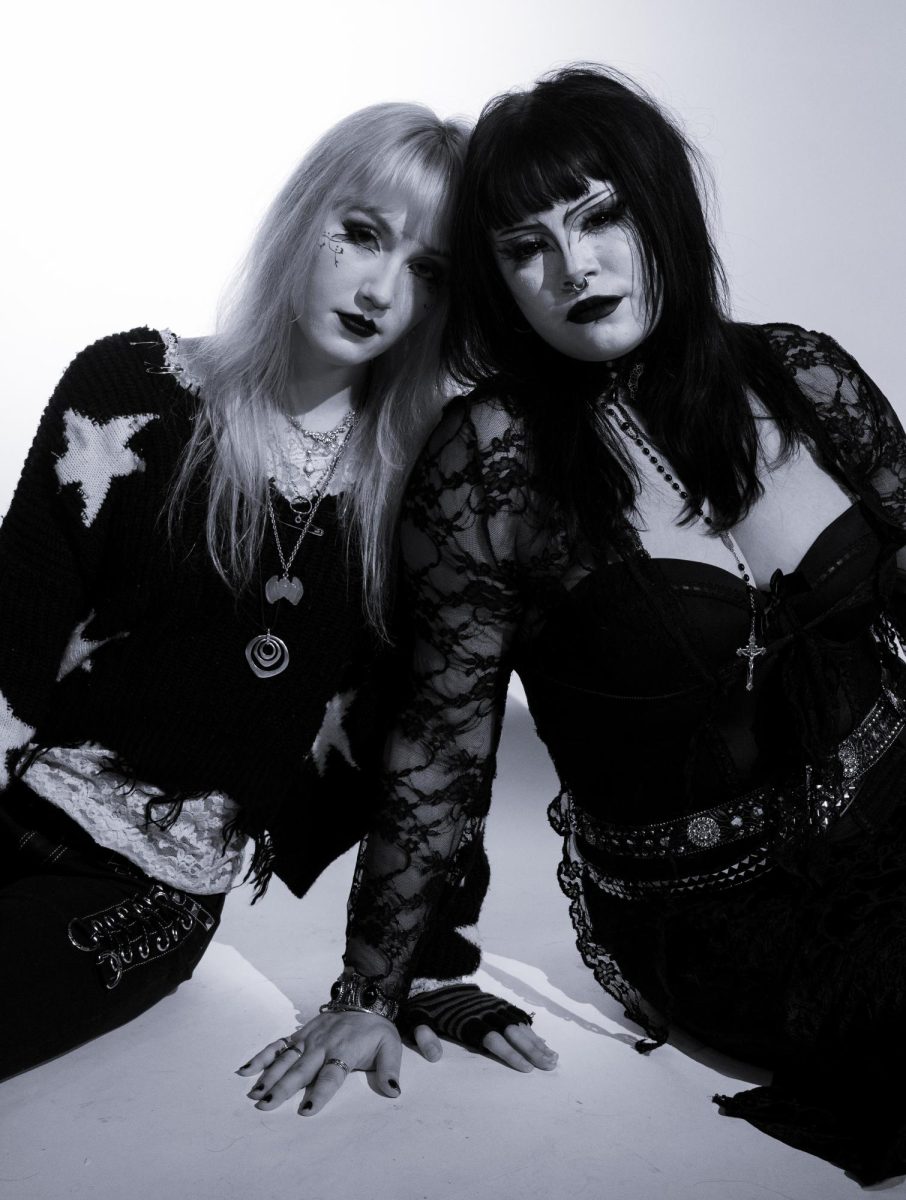


“Goth is about acknowledging the dark and either accepting it or celebrating it,” says Evangeline Jorjorian, a fourth year Oregon State student. “Life is yin and yang; you can’t understand the light without understanding the dark.”
The goth movement didn’t begin in a closet full of black clothing; it started on stage.
“The person who created goth itself, as in the music scene in the late fifties, was actually Screamin’ Jay Hawkins,” said Jorjorian. While Hawkins was a blues singer he embodied the theatrical side of what would later influence goth culture. His performances often involved him rising out of a coffin, wearing an elaborate costume with a flowing cape, and dancing around with macabre props, including his infamous skull on a stick.
Decades later, bands commonly known as the pioneers of goth, like Siouxsie and the Banshees, Bauhaus, and The Cure, brought that same drama and darkness into the public eye, shaping the foundations of the genre.
For many, that spirit of performance evolved into something more personal; a way to express emotion and individuality through music, art, and fashion.
“I think one of the points of it is to be opposite of the mainstream, to give voice to deeper feelings and themes and individuality that a lot of mainstream music doesn’t,” Kayla Carris, a third year student at Oregon State, says. “It’s a good way for people to express melancholy, existential dread, or romantic despair, it gives a good outlet in things that don’t normally get to be let out.”
“I identify with the label as goth, because it is mostly a music and fashion-based sub-genre. And I would say that because I do participate in both parts of that label, I would consider myself gothic,” Karis adds.
“Goth as an aesthetic obviously has its very strict guidelines,” Jorjorian notes. “You wear black or dark colors, though very like a very winter palette, I would say. But as far as an actual culture, I think it’s very expansive.”
This sentiment bleeds into everyday fashion for some students here at Oregon State.
“I have influences in my everyday wear that are gothic. You know, jewelry, lace, accessories, oddities, makeup,” says Carris. “If I’m doing the full get-up, I wear corsets, a skirt, ripped tights, layered tights, and flared over-shirts. I have one that’s kind of lacy, for sure. I also wear oddities, like a bobcat tail or something that’s a little macabre.”
“When I do dress up in my full get up and I go on to campus, I get nothing but compliments. I get showered with love. And it is really fun to experience how accepting Oregon State is. I would love to see more people out there and doing that,” Carris expressed.
Still, Carris stresses that being goth isn’t about appearance or effort rather about identity.
“You don’t have to go all out to be goth. You can be goth and wearing a T-shirt and sweatpants,” Carris says. “And that person, if they identify with the gothic label, they could 100% be goth if they would like to. You don’t have to dress up every day with this certain aesthetic.”
At its core, goth expression isn’t about what’s on the surface; it’s about a deeper acceptance of the self, even in the darker parts.
“I think that’s what goth people do,” explains Jorjorian. “They celebrate the darkness. They love it. They feel accepted by it. They feel celebrated by it. It’s like a symbiosis between an individual and their own shadow.”