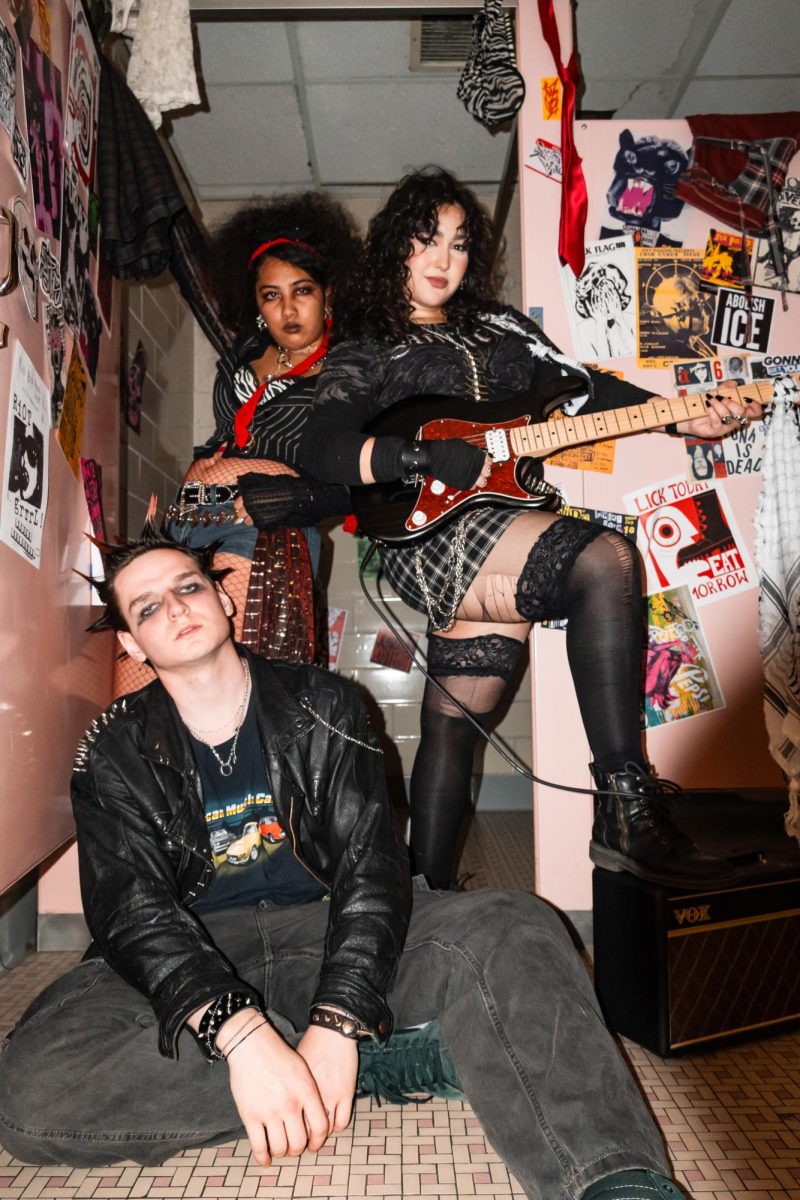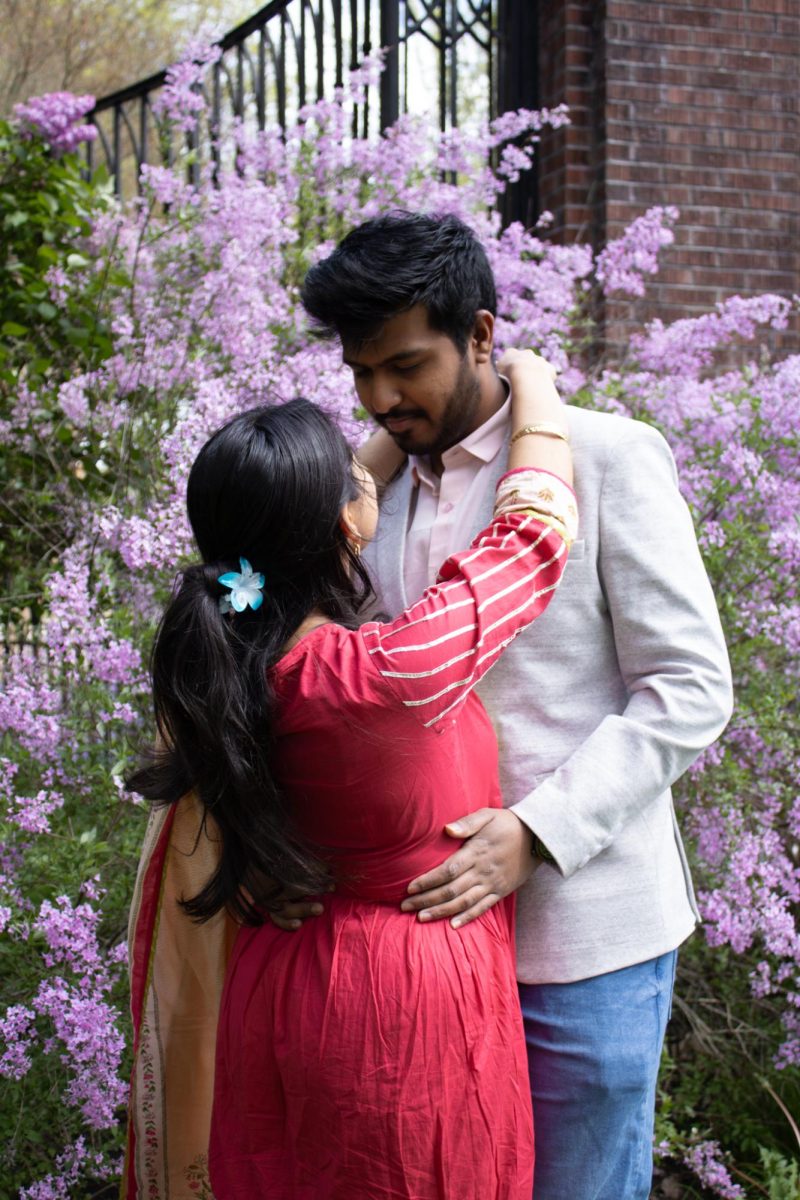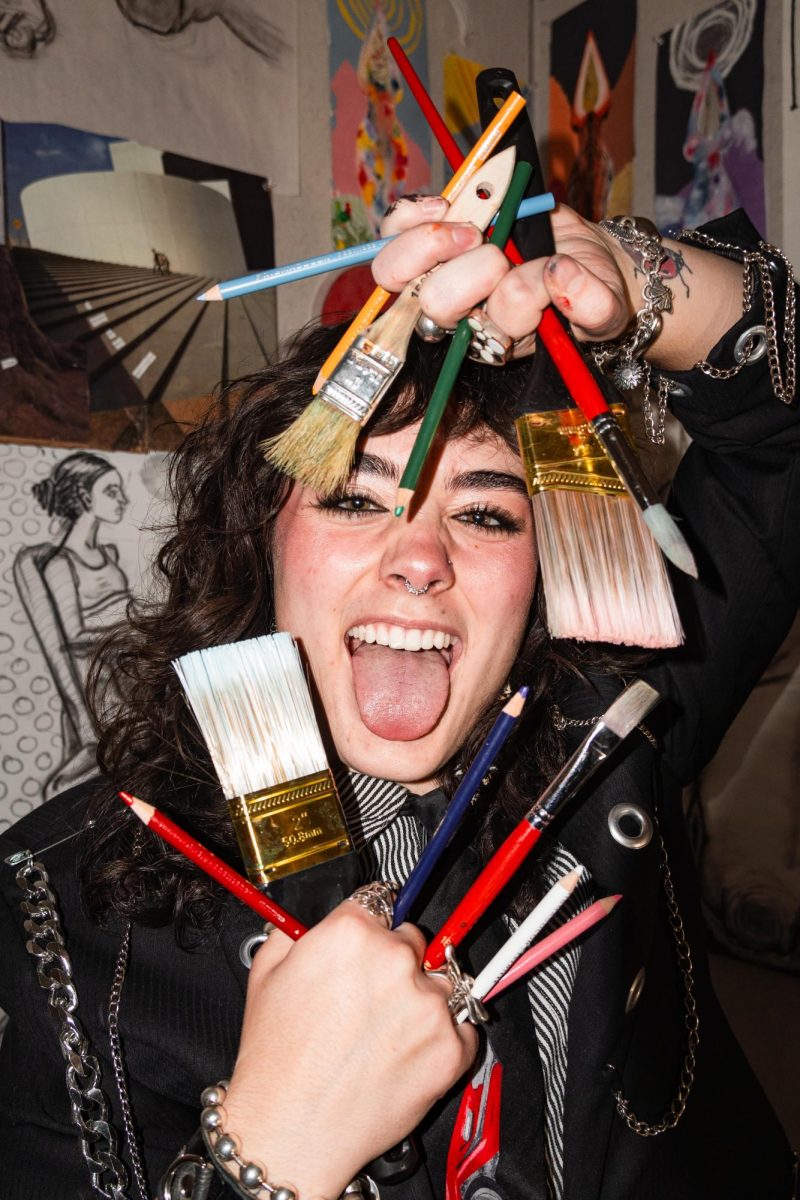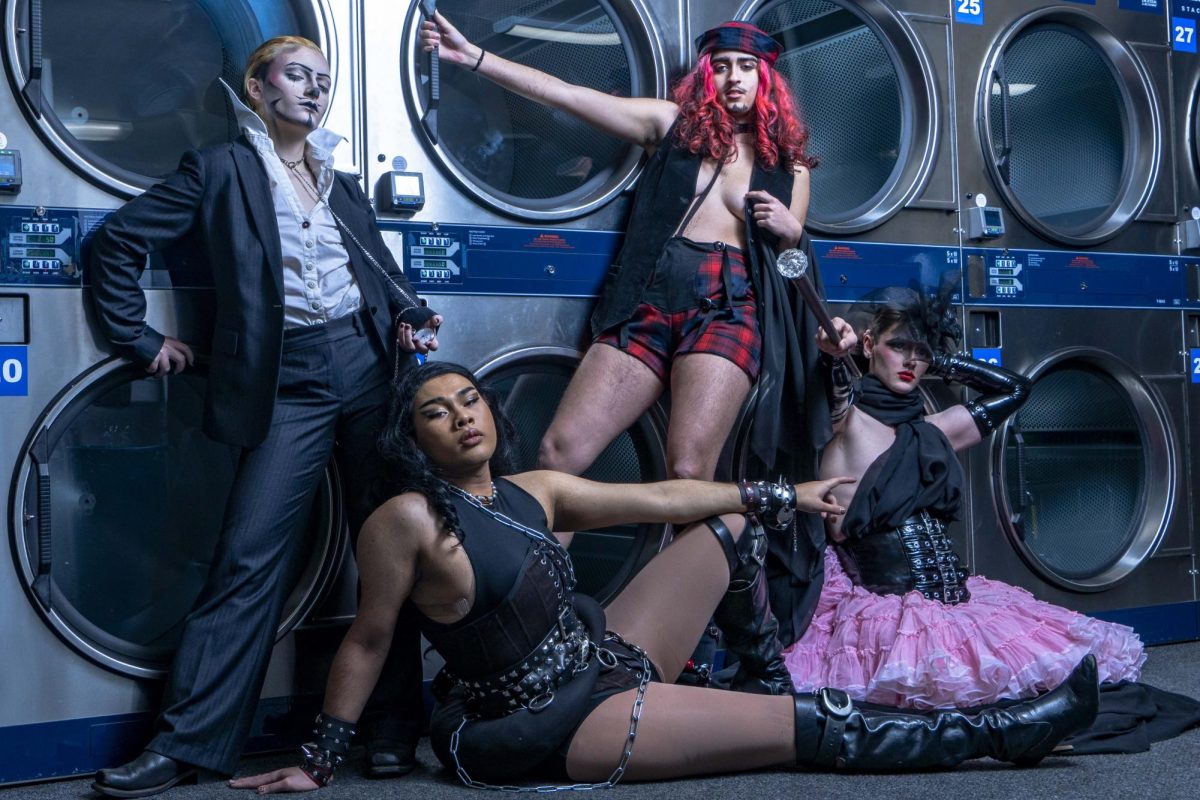

“Punk is rebellion, but not blind rebellion. It’s about fighting for what you believe in,” says Wyatt Miller.
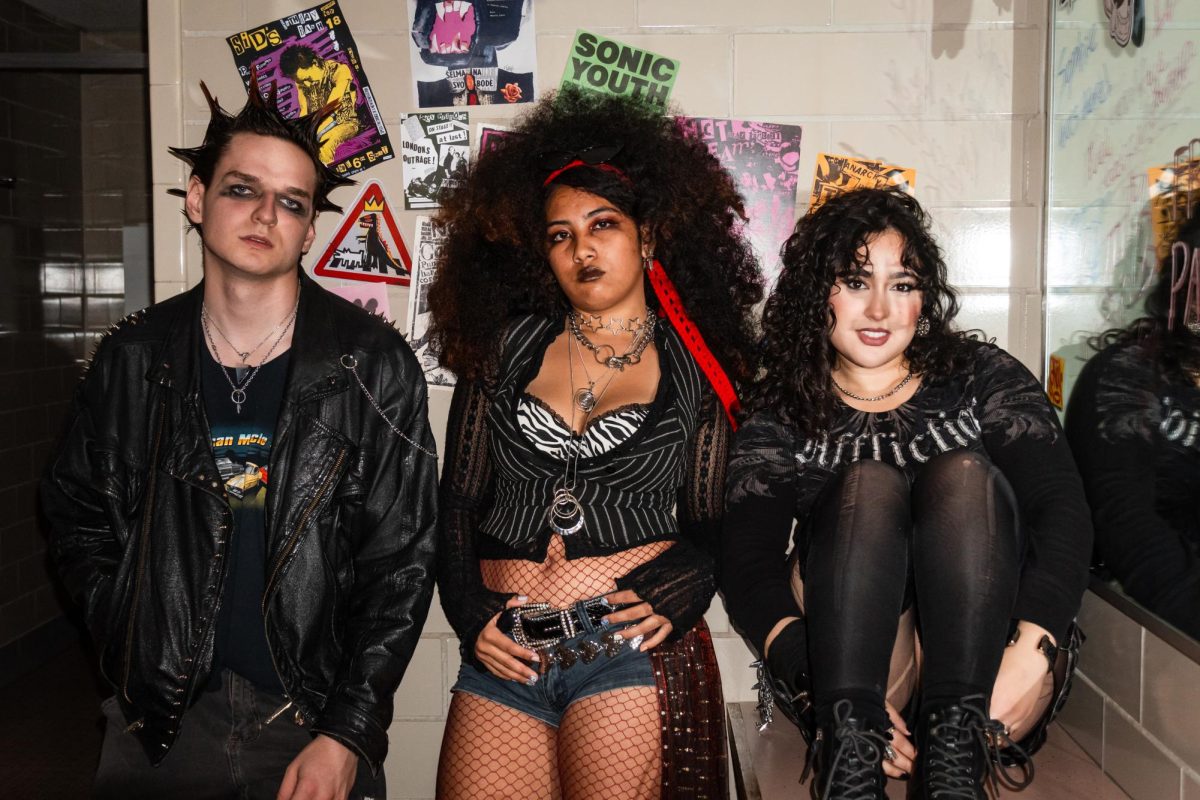
Miller is a third year mechanical engineering student at Oregon State who turns thrifted clothes into statement pieces. “It makes me feel more like myself, and it represents who I am.”
“You’ll be able to find a bit of punk inspiration in absolutely everything I wear because it feels like me,” says Miller.
Miller started altering clothes in high school. When clothes didn’t fit or didn’t suit him, he would customize them.
“I had these torn to shreds Dickies pants that I decided to draw on,” Miller says about one of his first alterations. “They were just boring, worn-out pants, and I was like, I want to make something fun out of these.”
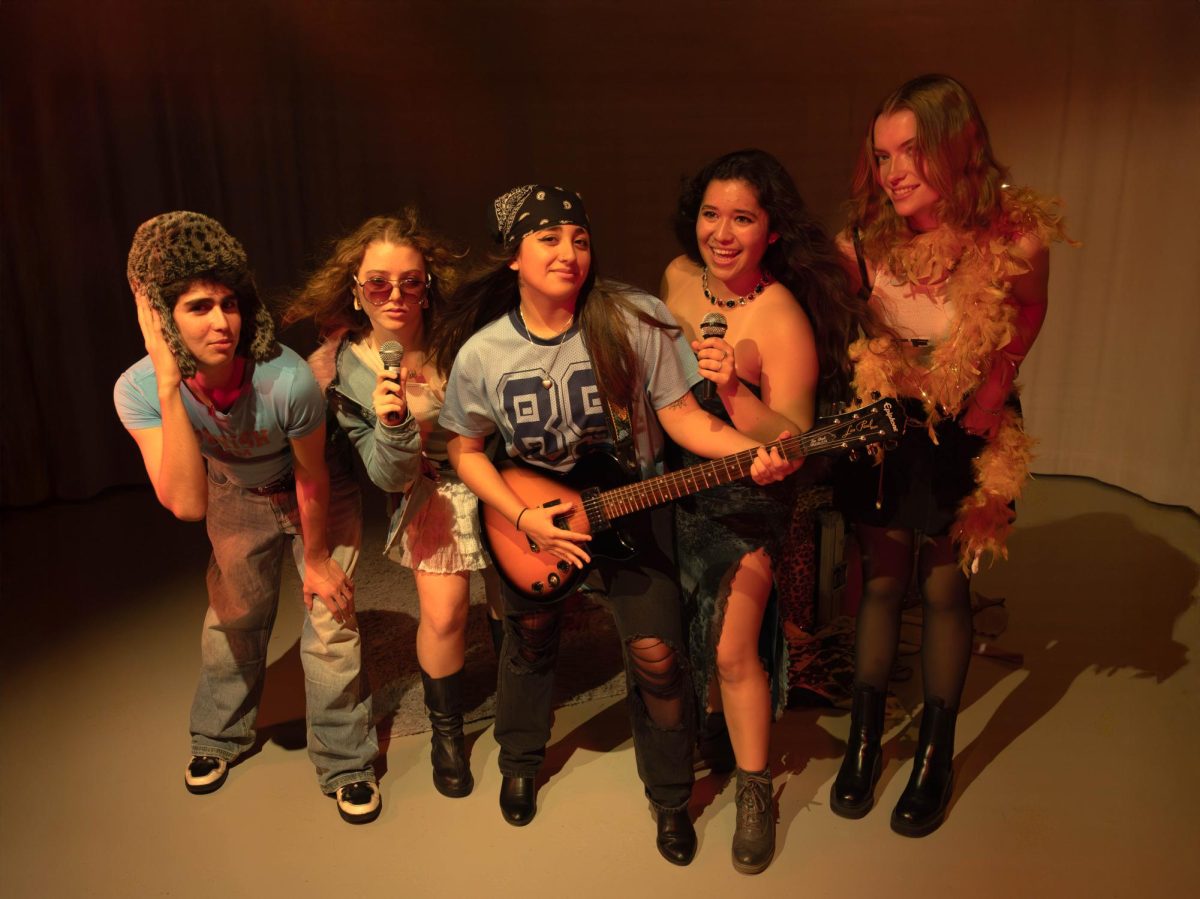
Miller’s most recent alteration is a leather jacket that’s included in this article’s photoshoot.
For Miller, punk fashion is inseparable from its ethics: “It’s not really punk if it’s not political,” he says. “Art is political. Music is political. Anything is political.”
MeiChi Neilson, a third year fisheries and wildlife student at Oregon State University, connects punk fashion to repair, care, and identity.
“I’ve experimented with weaving different color threads into my jeans to fix the holes,” Neilson says, “but of course, the easiest way to fix holes is with patches.”
Her approach is both practical and expressive, an act of resistance against fast fashion’s disposability.
“So I always have some patches at hand to fix up broken clothes or just put on my clothes to make them look cooler. Additionally, I’ve made my own patches out of spare fabric by painting or block printing on them,” says Neilson.
According to Miller and Neilson, punk lives on in bedrooms, garages, and small house venues.
“I love going to house shows,” Miller says. “Even people that aren’t dressed punk, they’re like, ‘Dude, I f*ck with your style’…It feels really welcoming.”
Miller mentioned going to see shows at Hook House, Shroom Shack, and Skunk House.
In Neilson’s experience, the shows are generally small but still enjoyable. “There are still a lot of DIY shows here, though. They put on hardcore shows sometimes…I did go to some really great ones. I saw Gouge Away and Initiate last year at the Corvallis Community Center, and it was really amazing.”
“People have a desire to be heard and to say I was here, I existed, I matter. Punk really allows you to do that because at the end of the day, anything you make, it’s yours. No one else is going to make anything that is the same as it.” Miller says.
When asked if punk could ever die, Neilson responded thoughtfully, “Punk doesn’t really receive mainstream attention in the way it used to, but it’s everywhere. Everywhere I go, I see punks, and I hear about punks. From every corner of the earth, people are using art and music to reject fascism and create community. And anywhere in the world at this very moment, there are some kids starting a band just for themselves. I don’t think punk will ever die.”