
Style on the slopes isn’t superficial, it’s part of the performance.
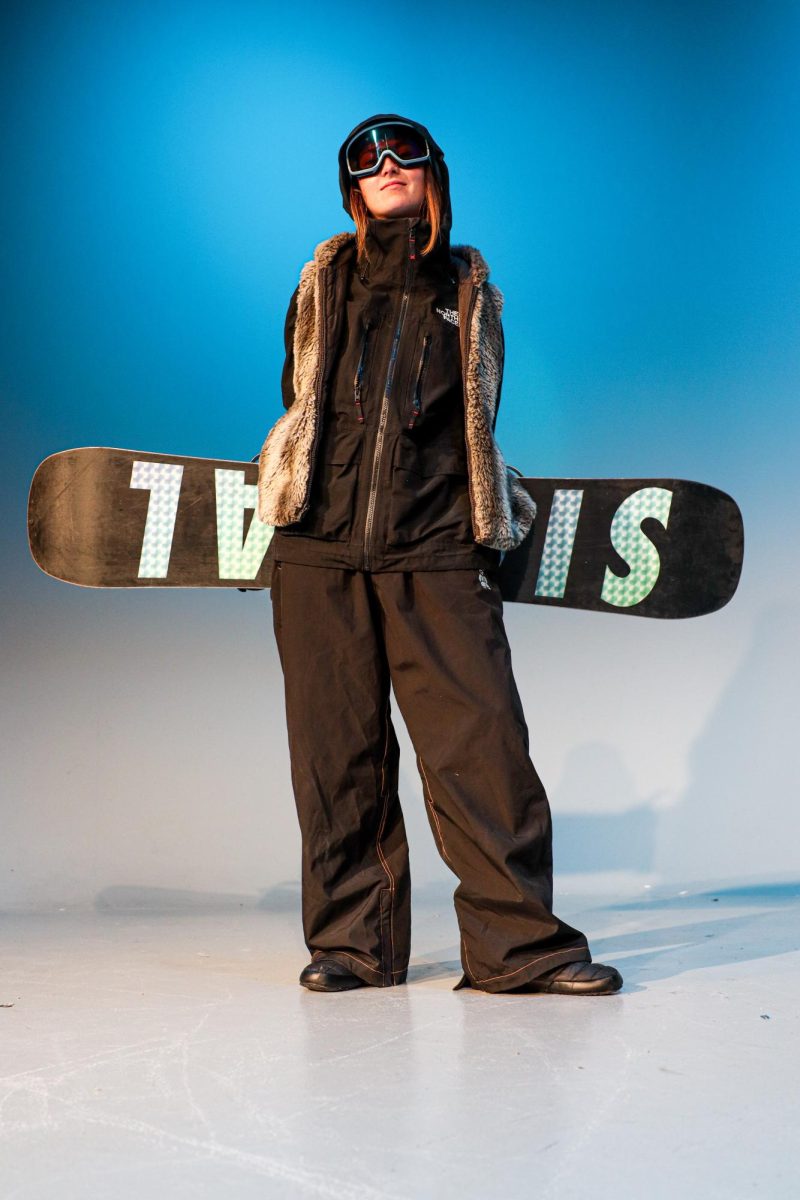
For Keaton Honberger, a third-year business administration and music major and snowboarder, confidence starts with what he wears. Feeling put together on the mountain helps him feel comfortable, which can translate into landing more tricks.
“Snowboarding is something that’s therapeutic to me, and I can just focus on myself and being in the zone,” says Honberger.
Snow sports demand skill and protection. However, riders are choosing gear that goes far beyond functionality. Curated outfits have become a reflection of identity and personal style. Each rider gravitates toward specific brands, retailers, and standout pieces. The slopes are evolving into a space where performance and fashion intersect.
Honberger’s go-to brands are Arc’teryx and The North Face. Both offer high-quality gear that is also comfortable. His style leans utilitarian, clean lines, neutral colors, and a baggy fit. While he enjoys cultivating his personal style, he tries not to spend excessive money on winter clothes. High-quality gear can be expensive, especially as a student.
Simon Corbett, a third-year architectural engineering major, sources most of his gear secondhand. Thrifting allows him to find high-quality brands without breaking the bank.
Corbett’s go-to method for finding gear includes secondhand gear stores, ski swaps, Facebook Marketplace, and even scrounging what he can from friends and family. His advice for beginners looking to find gear is to rent from the outdoor gear rental at Dixon.
There can sometimes be a stigma around having the newest or highest-quality gear. Camille Voelk, a third-year graphic design major, also turns to thrifting for much of her mountain wardrobe.
This season, she has been trying to be more playful and let her personality show through her gear, even with the hand-me-down jacket she has had for eight years.
For Voelk, part of her confidence comes from hiding under layers of gear. It feels freeing to mess up and not care what people think because they do not know who she is.
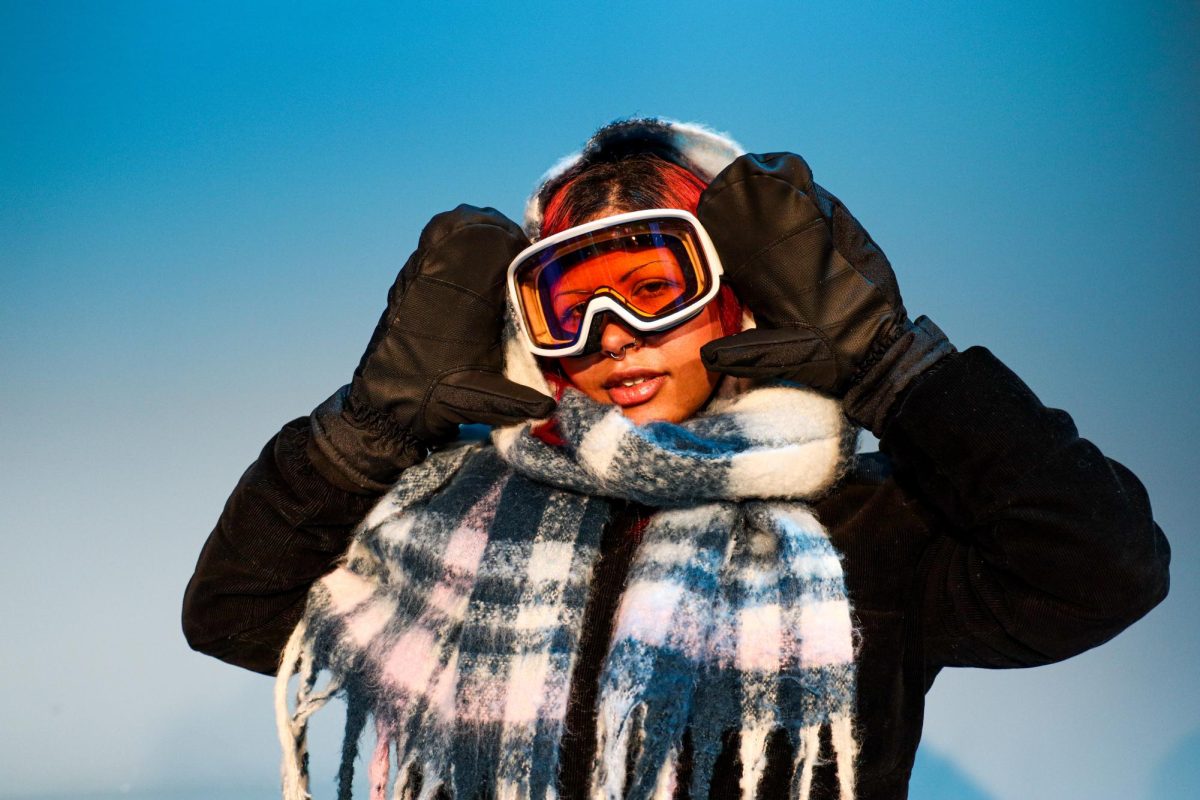
Helmets, goggles, mittens, thick jackets and pants, and bulky boots conceal the identities of riders on the mountain. When Voelk was skiing as a child, she would get self-conscious when people called her a boy.
“There is still that little kid in me now, worried that I am not ‘feminine enough,’” says Voelk. Now she makes subconscious decisions that make her appear more feminine.
Off the mountain, she usually relies on her hair to identify herself. She says it feels strange when no one is able to see it. To appear more feminine on the mountain, she pulls out two strands of hair, sometimes referred to as “slut strands.”
Along with her pulled-out strands, she embraces a granola-inspired style with baggy clothing. In addition to always wearing a helmet, she loves her beanies, bandanas, and knitted balaclava.
“Please wear helmets, people. Protect that beautiful brain,” says Voelk.