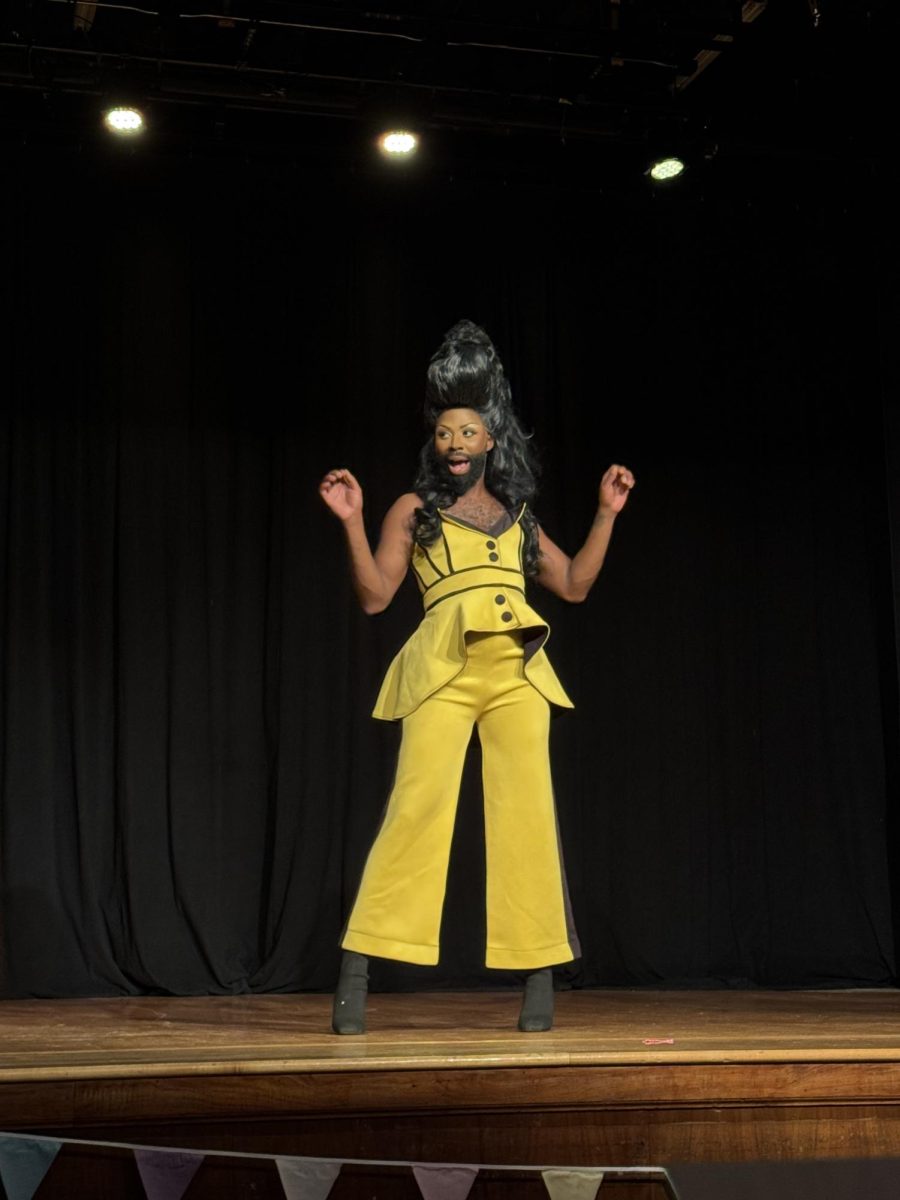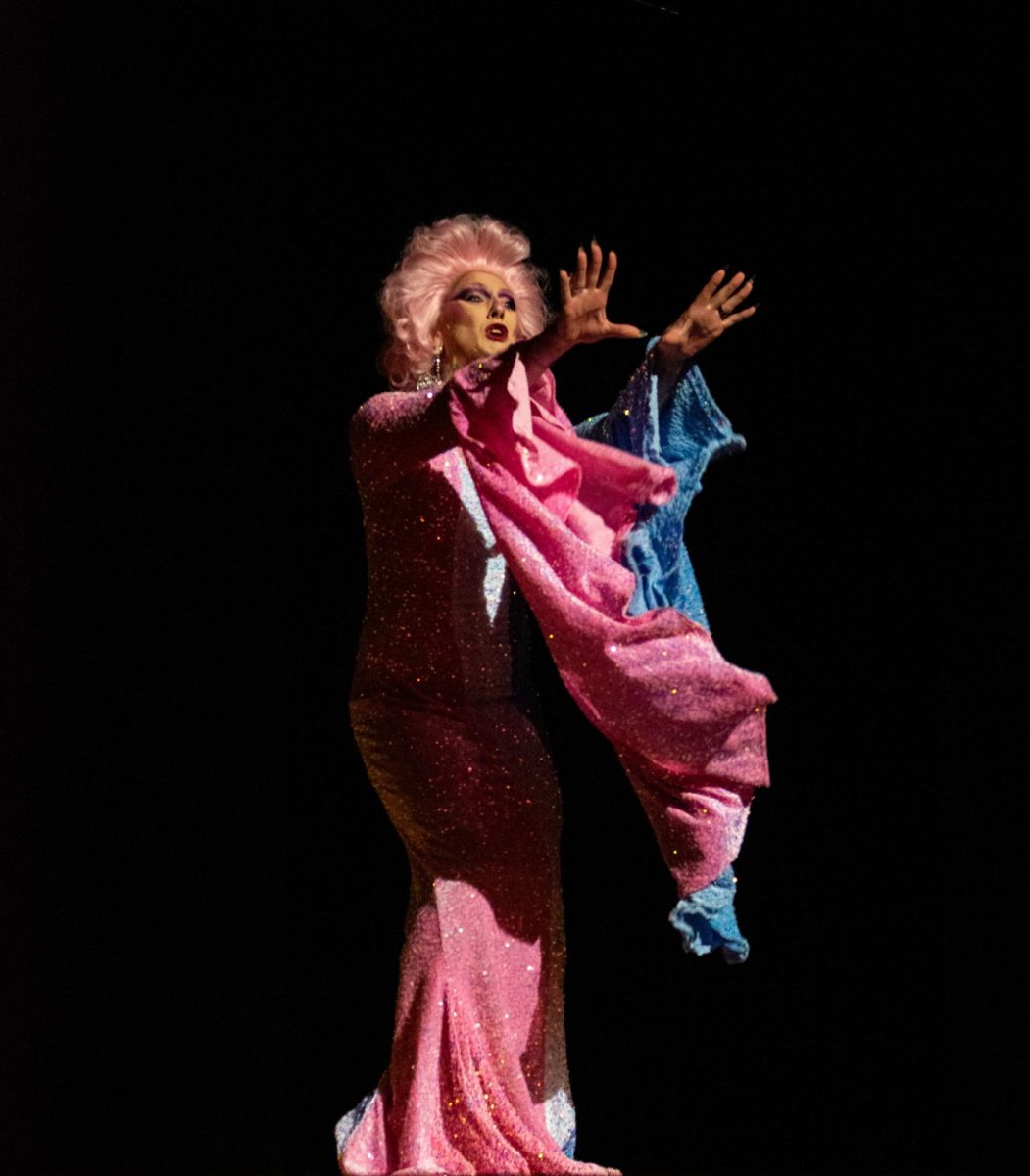


Oregon State University students were challenged to turn trash into treasure.
OSU’s Apparel Design Club, AATCC, partnered with the Product and Merchandising Management club, NRFSA, and the Sustainability in Business Club to bring back OSU’s very own Trashion Show, a sustainable fashion showcase!
Seven designers showed off their handmade and upcycled pieces to promote sustainable fashion.
The Trashion Show pushed designers to use unconventional materials and methods to create their clothes. There was no limit to what materials could be used and how.
First year designers Kat Stand, majoring in pre-graphic design, and Genevieve Newton, majoring in psychology and pre-apparel, took Trashion Show more literally, making a dress from paper bags.
“I think it’s really important for us to acknowledge the materials we’re using,” says Newton. “Try to use pieces that are unconventional.”
The dress they designed was made from old Trader Joe’s paper bags, held together mostly by staples.
Nora Whalen, a second year major in pre-apparel and product merchandising and management, also used unconventional materials.
“I used an old tablecloth and then upcycled it into this two-piece matching set. That was really fun to take something and just make it kind of entirely new.”
Other designers used their pre-loved clothes and created new pieces.
“The most sustainable thing you can do is pick something that you already have and give it a new life,” says Julien Fedou, a third year apparel design student.
Fedou used upcycled clothes he bought in high school that he had, in his words, “worn to threads.” By fixing torn-up jeans with old fabric scraps, he gave them a whole new look and could keep wearing them instead of contributing to fashion waste.
Globally, we have produced 92 million tonnes of textile waste. 57 percent of clothing ends up in a landfill, and 25 percent is incinerated. Overall, 10 percent of all greenhouse gas emissions are produced by the global fashion industry.
Fedou claims, “The easiest way to bring sustainability into fashion is to not buy new stuff…the same goes for designing clothes.”
NRFSA president and third year product and merchandise major Kaylee Ann Benavente, AATCC treasurer and third year apparel design and biology major Ellie Cunnington, and Sustainability in Business club president and third year business analytics and sustainability major, Piper Thompson, hope that the Trashion Show will make people more mindful of sustainable practices and utilize sustainability in a creative way.
“I think what we hope people will take away from this event is that sustainability doesn’t have to be as intimidating as some people might think it is. We want them to see what they can do with their own two hands and with the skills they learn,” says Thompson. “I think being sustainable means to not aim to be perfect, but to do better.”